Safe Signals Institute · An independent initiative
Dozens of reports.
Zero investigations.
A Polish mother in Sweden reported forced exploitation, coercion and the perpetrator’s conduct towards her teenage daughter to institutions in two EU countries, again and again. Not one investigation was opened. Safe Signals exists so that the next warning sign is recognised in time.
The gap
Europe has the standards. Victims fall through the gaps between them.
Sweden and Poland are bound by the Istanbul Convention on violence against women, the Lanzarote Convention on the protection of children from sexual exploitation, and the Council of Europe Convention on Action against Trafficking in Human Beings. Their implementation is monitored by GREVIO and GRETA.
On paper, the protection exists. In practice, a victim who reports to the police, social services and the courts of two countries can still be left with no investigation, no protection and no answer.
01
It starts with a promise
Exploitation rarely begins with force. It begins with a job offer, a relationship, a promise.
02
Control through paperwork
Address registration, personal identity numbers and documents become tools of dependency.
03
Reports in isolation
When agencies do not share what they see, every report remains an isolated incident.
Safe Signals works on the moment before harm becomes irreversible: when recognition is still possible.
The case behind the mission
“My mum thinks I’m studying in Norway.”
The author overheard this sentence on a night ferry from Świnoujście to Ystad, spoken by a young woman barely twenty years old. It could have been her own daughter. Or herself, a few years earlier, when she arrived in Sweden believing it was one of the safest countries in the world for women and children.
Protected by No One is her documented account: a false job offer, forced exploitation, control through administrative dependency, and the loss of her son, whom the Swedish system refused to return. The book is grounded in a bibliography of over 30 sources, including GREVIO and GRETA reports on Sweden, and ends with concrete demands for systemic change.
One story. Five languages.
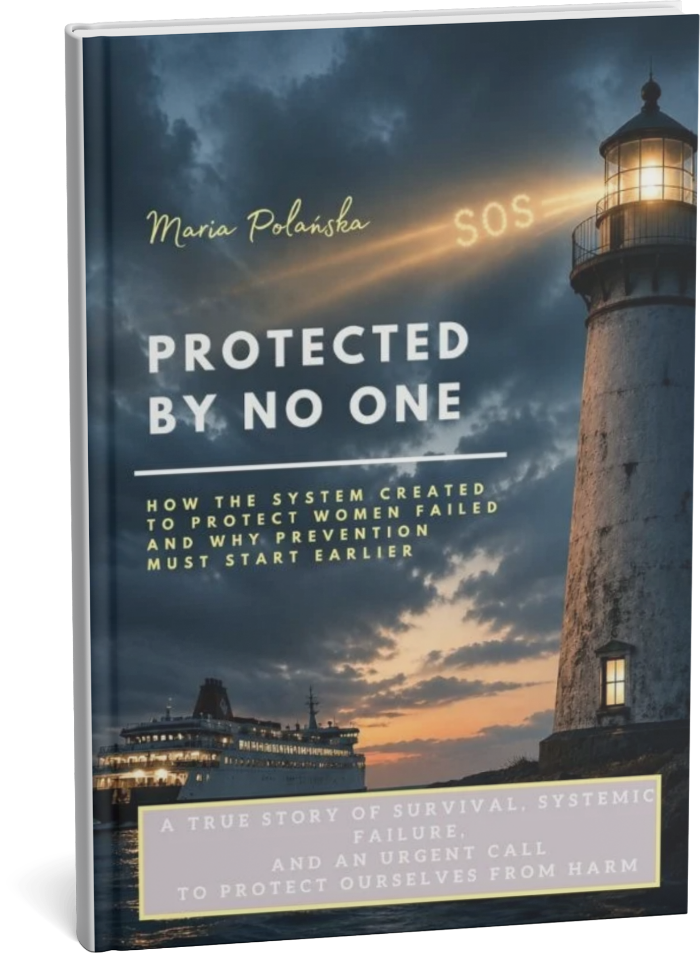
English
Protected by No One
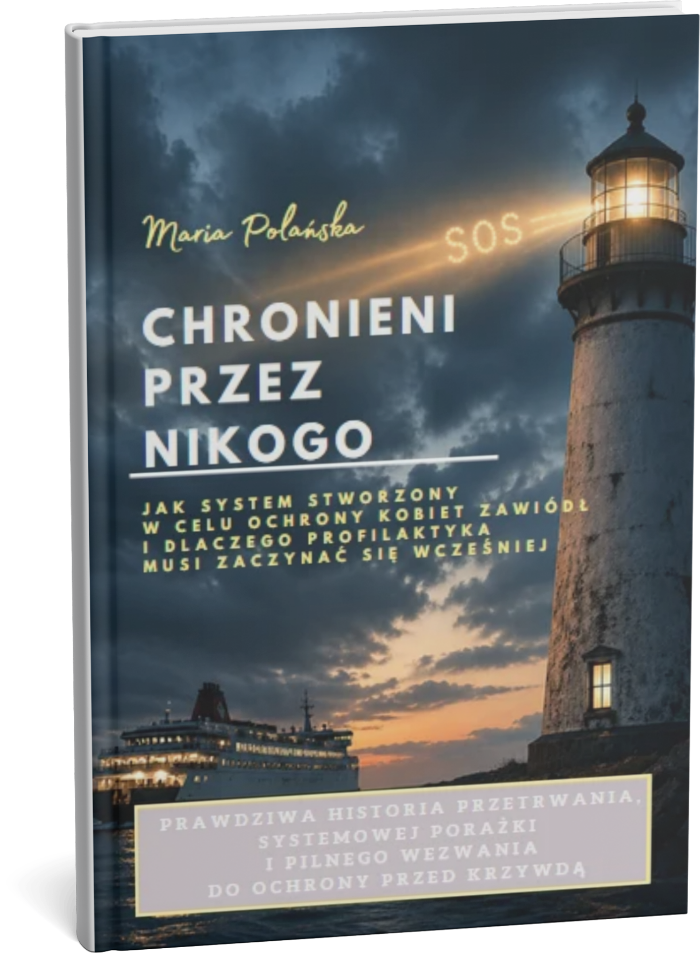
Polski
Chronieni przez nikogo

Deutsch
Geschützt von Niemandem
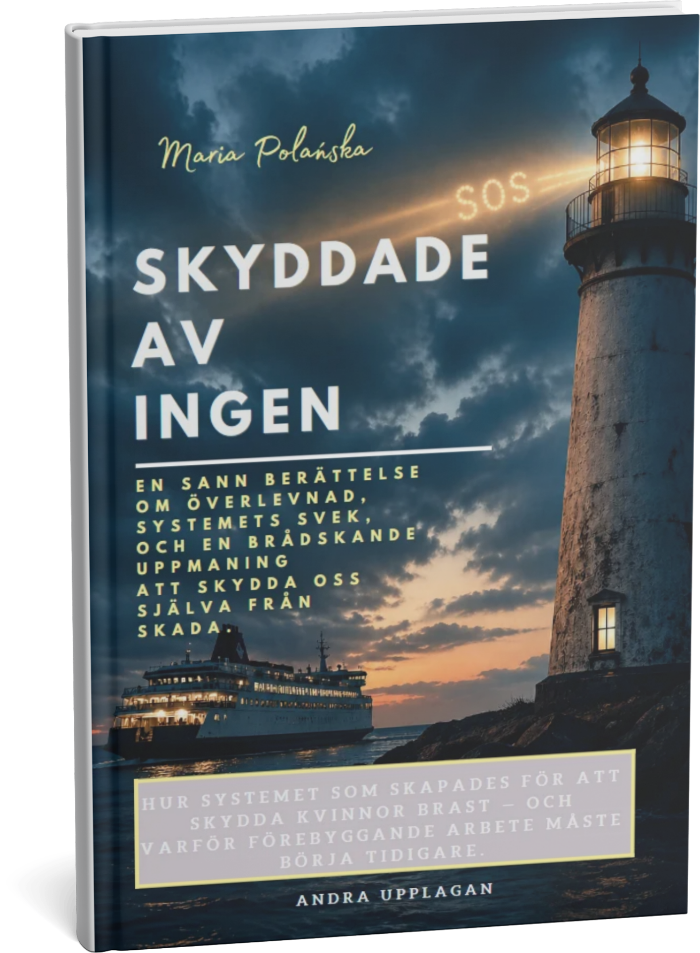
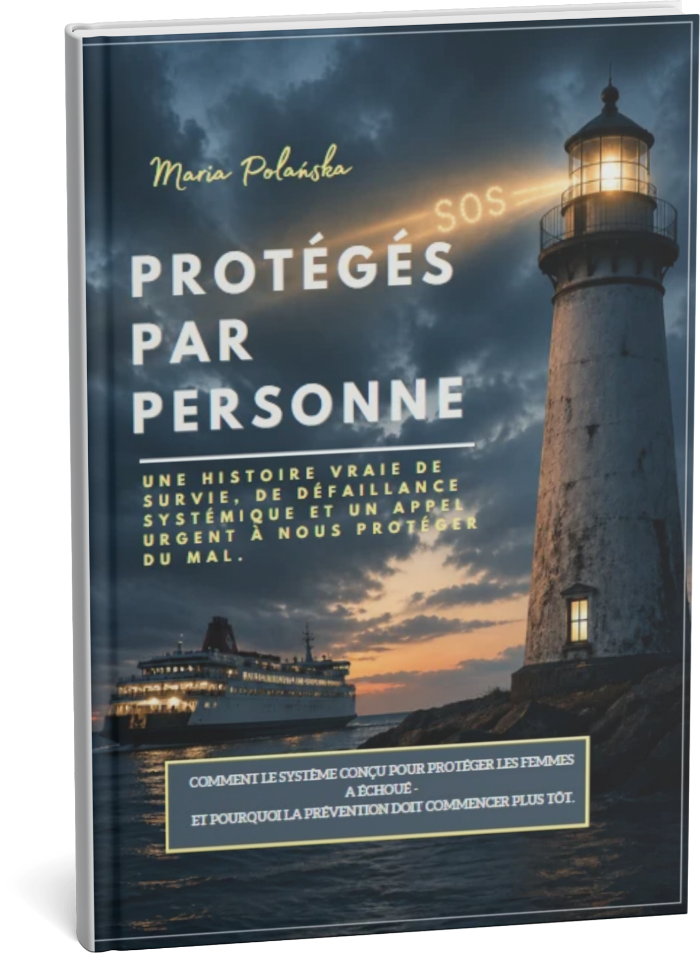
Click a cover to open the book on Amazon. For adult readers. Names and some places have been changed.
What we do
Recognising risk is a skill. It can be taught.
Safe Signals is developing practical, plain-language resources for parents and professionals: how to recognise the early signs of manipulative recruitment and coercive control, and what to do when you notice them.
In preparation: our first guide for parents. Would you like to receive it when it is ready? Write to office@safesignals.org with the subject “Guide”.
For decision-makers and press
For policymakers, journalists and professionals
If you work on human trafficking, child protection, violence against women or the rights of migrant families, we would like to hear from you. On request, we can provide:
- a summary of the case and of the institutional responses it received,
- the book’s full list of sources,
- a review copy of the book.
We also welcome professionals, researchers and organisations working on early recognition and victim support: for collaboration, research or simply to compare notes on what works.
Who we are
Safe Signals Institute is an independent initiative founded by Maria Polańska, a Polish writer and mother of four, and the author of Protected by No One. The author writes under a pen name.